
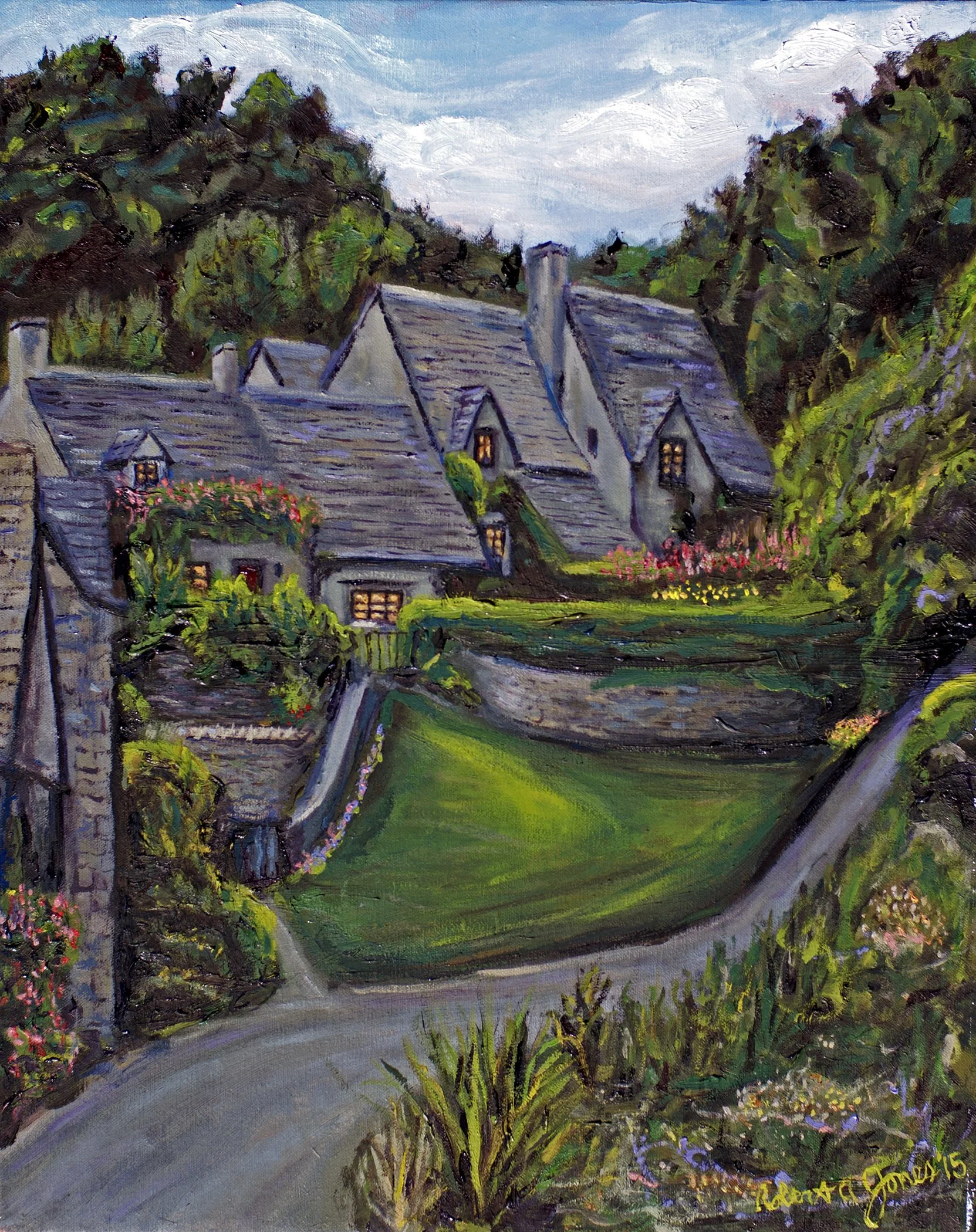
 Image 1 of 1
These limited edition fine art prints are signed and numbered on acid free rag paper using archival inks rated to resist fading for 100 years under recommended display conditions.
The 19th-century artist and craftsman William Morris called Bibury "the most beautiful village in England" when he visited it.
The village is known for its honey-coloured 17th-century stone cottages with steeply pitched roofs, which once housed weavers who supplied cloth for fulling at nearby Arlington Mill. Until the 1980s, that building also housed the museum of Arlington Mill with a collection of period clothing, before it was shifted to Barnsley House. The Mill is now a private residence.
The picturesque Arlington Row cottages were built in 1380 as a monastic wool store. This was converted into a row of cottages for weavers in the 17th century. The cloth produced there was sent to Arlington Mill. Arlington Row is a popular visitor attraction, probably one of the most photographed Cotswold scenes, and was preserved by the Royal College of Arts.