
 Image 1 of 1
These limited edition fine art prints are signed and numbered on acid free rag paper using archival inks rated to resist fading for 100 years under recommended display conditions.
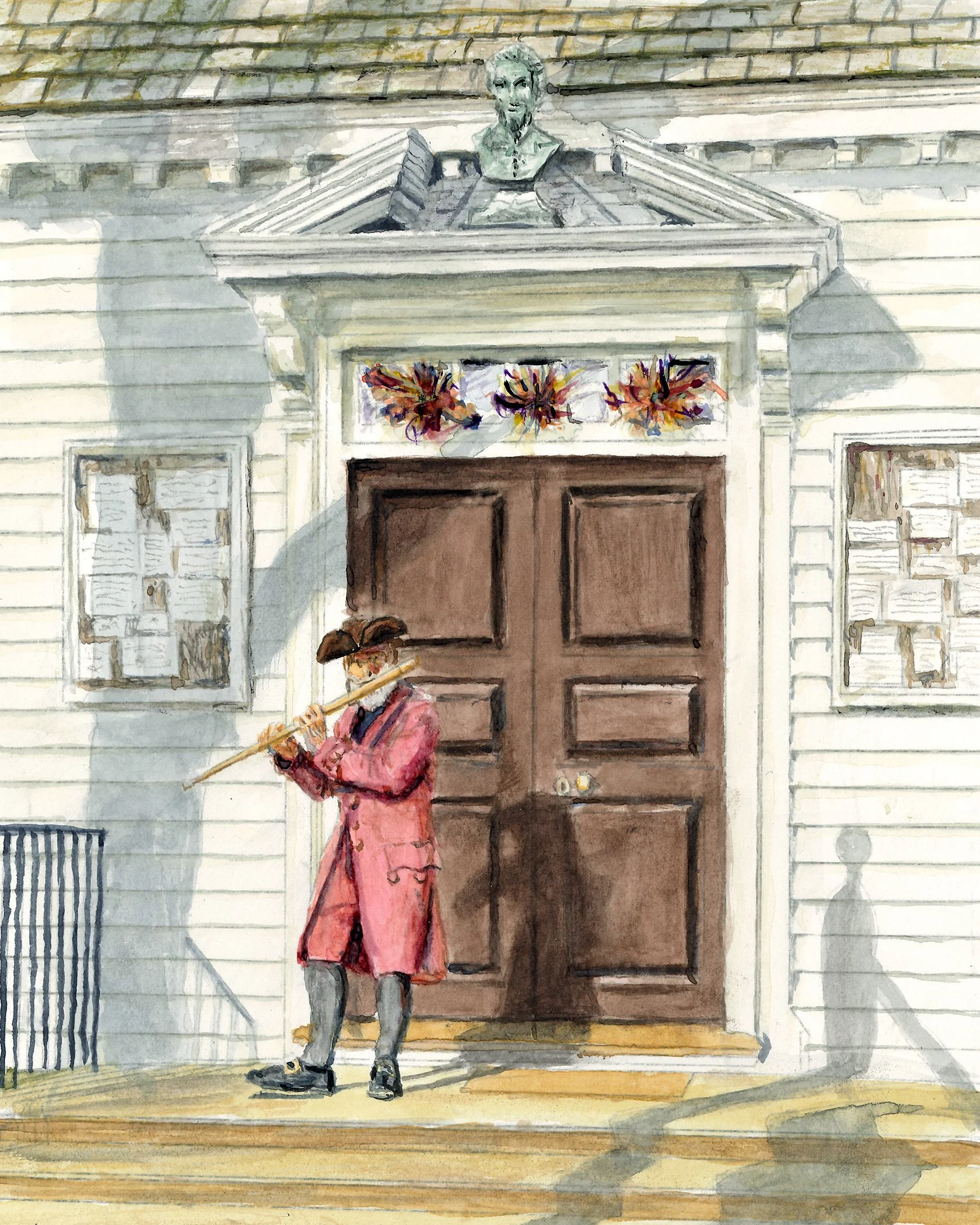
Walking along the Duke of Gloucester Street in Colonial Williamsburg, Virginia, I happened upon this historical interpreter in front of the Raleigh Tavern. This gentleman is playing a wooden flute to entertain passers-by. Music is deeply rooted in our DNA no matter where in the world we may wander.
The Raleigh Tavern was a tavern in Williamsburg, Virginia, and was one of the largest taverns in colonial Virginia. It gained some fame in the pre-American Revolutionary War Colony of Virginia as a gathering place for legislators after several Royal Governors officially dissolved the House of Burgesses, the elected legislative body, when their actions did not suit the Crown. It was also the site of the founding of the Phi Beta Kappa Society on December 5, 1776.
Rebuilt in 1930–31, it was both the first building to be reconstructed and to be opened as part of Colonial Williamsburg. Unlike several other taverns in Williamsburg that operate as restaurants or inns, the reconstructed Raleigh Tavern building serves as a museum, showing visitors how the tavern would have appeared.
It was named after Sir Walter Raleigh, an important figure in the English settlement of Virginia. A lead bust of Raleigh sat above the entrance door.