
 Image 1 of 1
These limited edition fine art prints are signed and numbered on acid free rag paper using archival inks rated to resist fading for 100 years under recommended display conditions.
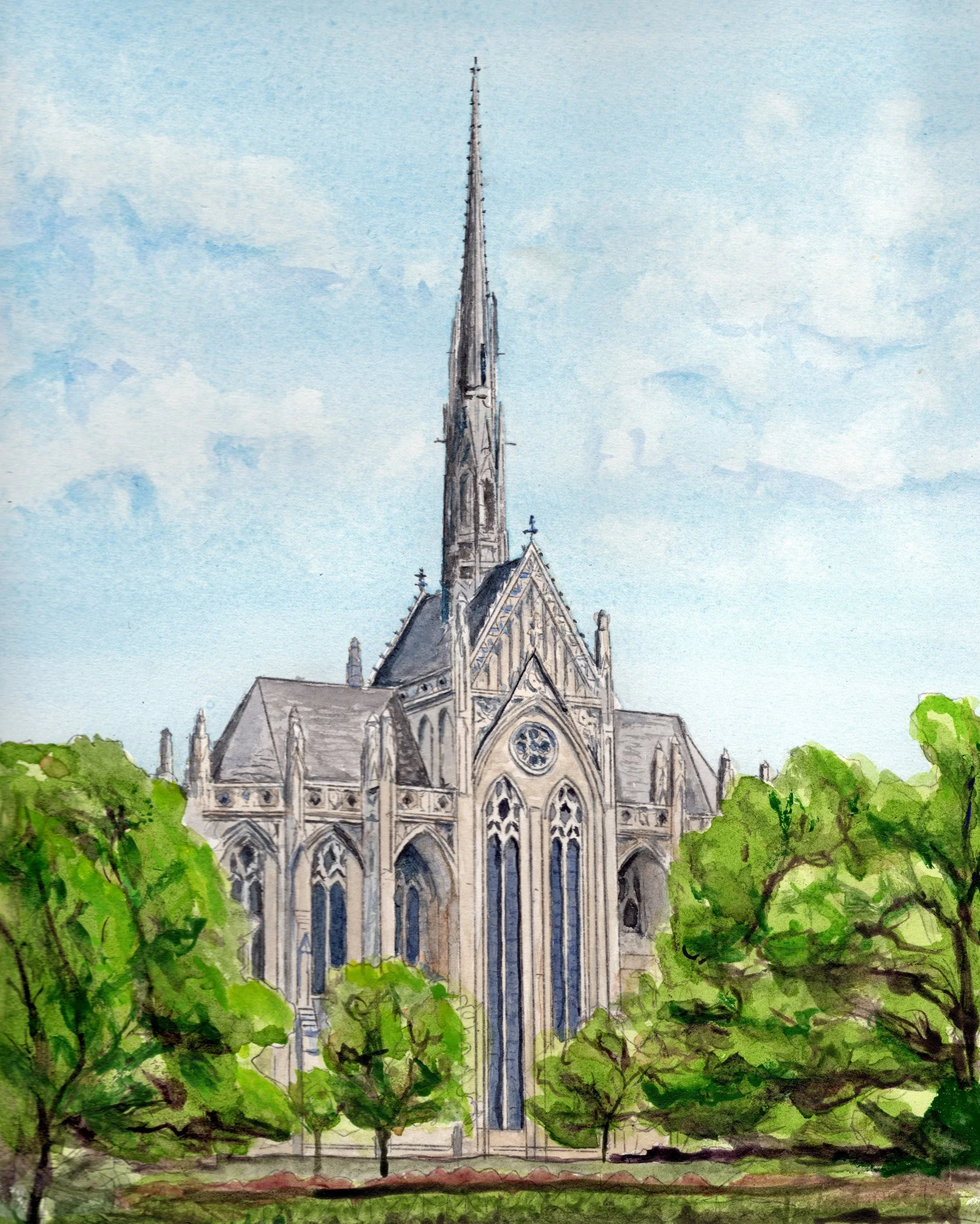
The chapel was a gift of German-American Henry John Heinz, founder of the H.J. Heinz Company, who wanted to honor his mother, Anna Margaretha Heinz, with a building at the university. Upon his death in 1919, Heinz’s three surviving children added to his bequest to memorialize their grandmother and honor their father. Their choice of a chapel for a memorial was guided by the concepts of education and religion which Anna Margaretta Heinz imbued in her children.
The neo-Gothic chapel was designed by Charles Klauder who also designed the Cathedral of Learning and the Stephen Foster Memorial, both located right next to the chapel on Pitt’s campus.
Heinz Memorial Chapel is used for various religious services, but as intended from its beginning, it is interdenominational.