
 Image 1 of 1
These limited edition fine art prints are signed and numbered on acid free rag paper using archival inks rated to resist fading for 100 years under recommended display conditions.
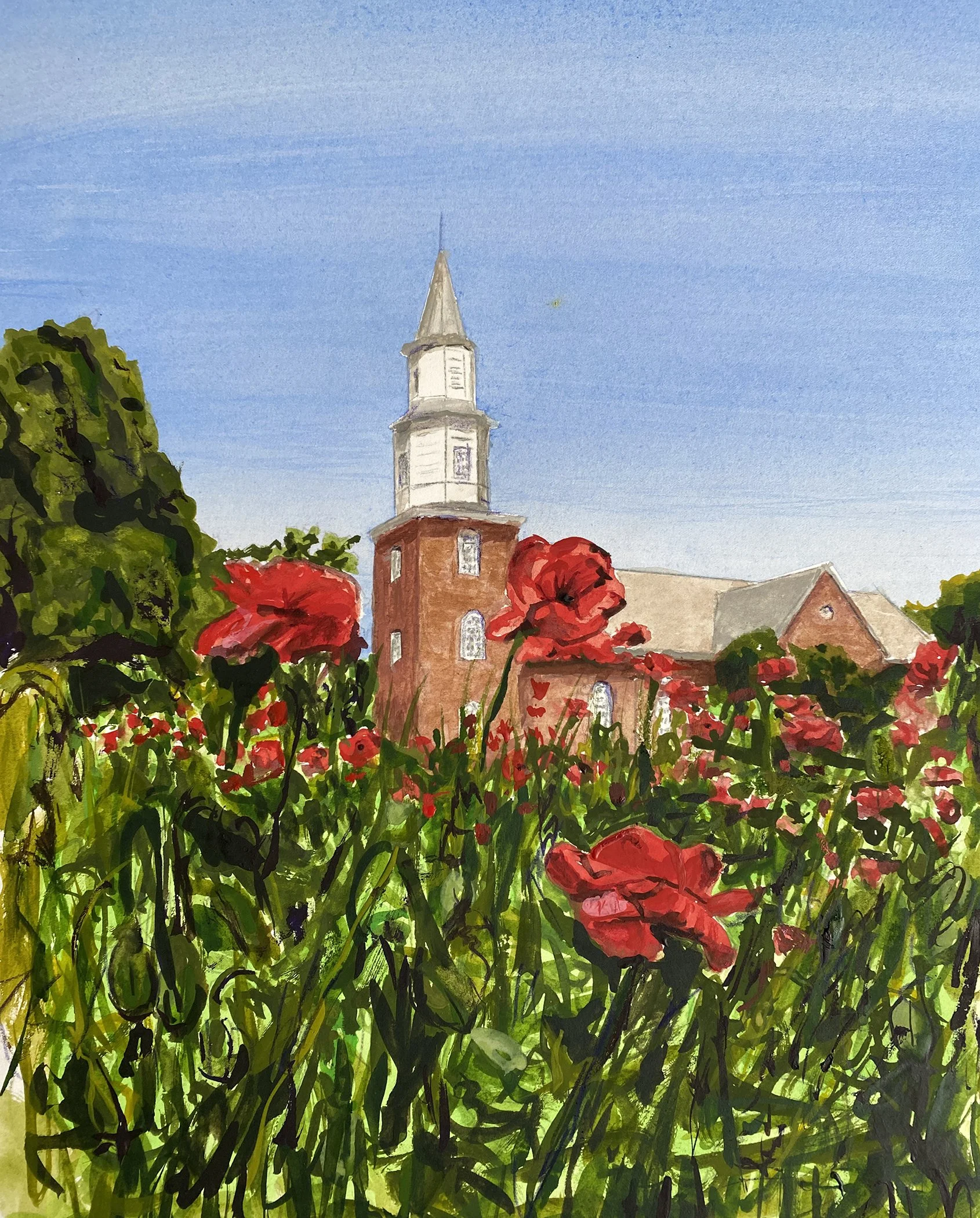
I’ve always liked the structure and coloring of the Bruton Parish Church. It takes on a different character as the light and shadows change throughout the day. This portrayal is captured in the Springtime as the poppies are in full bloom and add a carpet of color in the foreground.
Bruton Parish Church is located in the restored area of Colonial Williamsburg in Williamsburg, Virginia, United States. It was established in 1674 by the consolidation of two previous parishes in the Virginia Colony, and remains an active Episcopal parish. The building, constructed 1711–15, was designated a National Historic Landmark in 1970 as a well-preserved early example of colonial religious architecture.
As the American Revolutionary War began in 1776, the power of both the monarchy and the church as an institution controlled by the government came into question in the colony. Among the Virginia leaders of the time who attended Bruton Parish Church were Thomas Jefferson, George Washington, Richard Henry Lee, George Wythe, Patrick Henry, and George Mason.